Burbank's Armenian community is one of the largest in North America. Over the past several decades, Armenian immigrants built businesses, raised families, and created institutions that define the city. Food is central to that story. The kebab houses, bakeries, and Mediterranean restaurants that dot Burbank Boulevard and the side streets are not just places to eat—they're gathering places where language, memory, and tradition intersect.
What Is Armenian Cuisine?
Armenian cuisine sits at the crossroads of Western Asia, the Mediterranean, and the Middle East. It emphasizes fresh vegetables, legumes, grains, and meat—historically lamb and chicken, though pork plays a significant role in modern Armenian dining. The cuisine is characterized by grilling, baking in communal ovens, and slow cooking with aromatic spices like cinnamon, clove, and sumac.
What makes Armenian food distinctive is its restraint. Flavors are bold but never overwhelming. A traditional Armenian meal emphasizes balance—the char of grilled meat, the slight tang of labneh (strained yogurt), the earthiness of bulgur, the brightness of fresh herbs. It is serious food built on centuries of agricultural and culinary tradition.
Essential Armenian Dishes
Lula Kebab
Ground lamb or beef mixed with onions, bulgur, and spices, grilled on a flat skewer. Served with lavash (flatbread), raw onions, and fresh herbs. This is foundational Armenian food—smoky, textured, deeply satisfying.
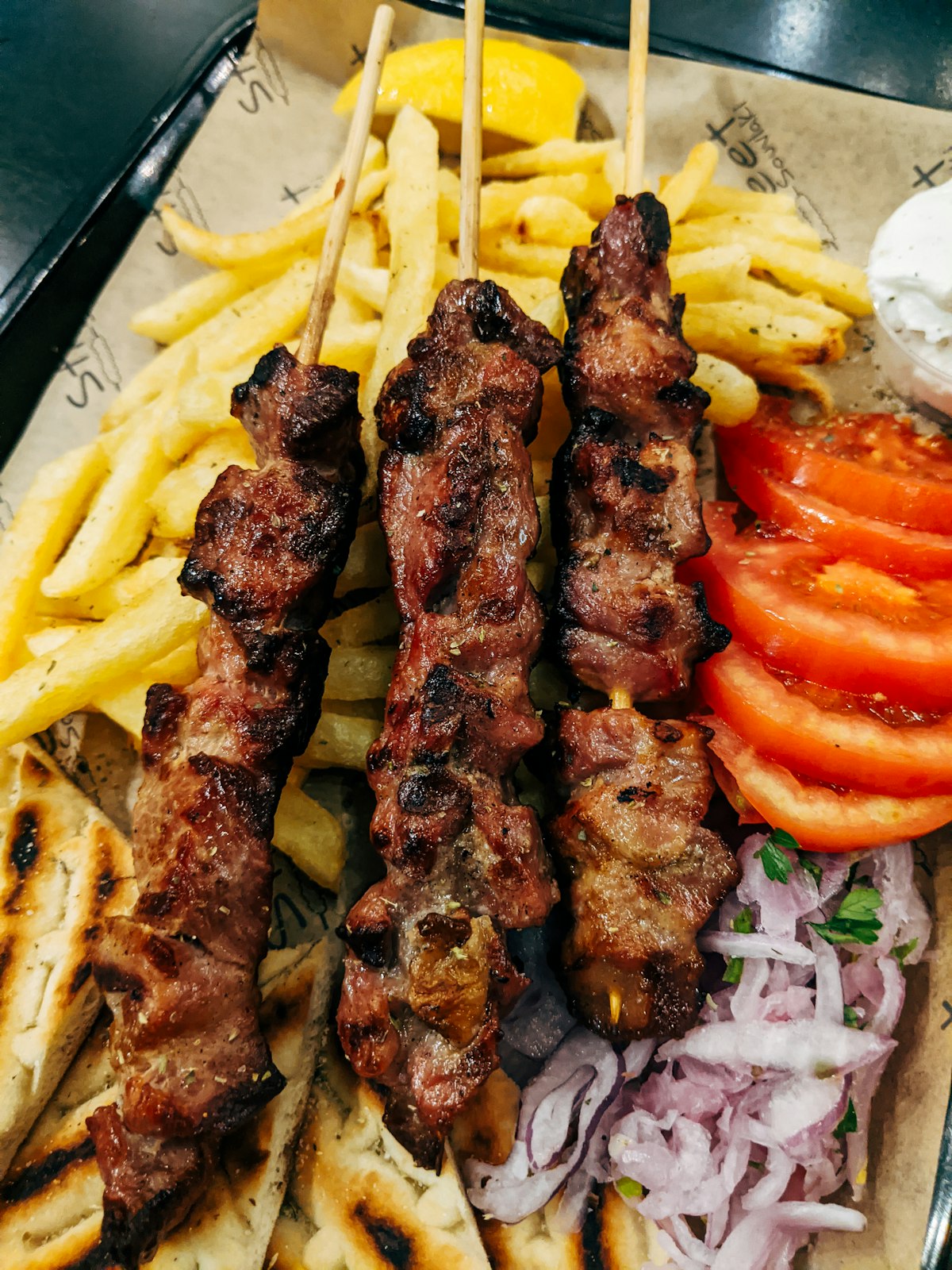
Shish Kebab
Chunks of lamb, beef, or chicken marinated in onions and spices, grilled over charcoal. The char on the outside, the tender meat inside, and the slight smoke are everything. Often served with grilled vegetables.
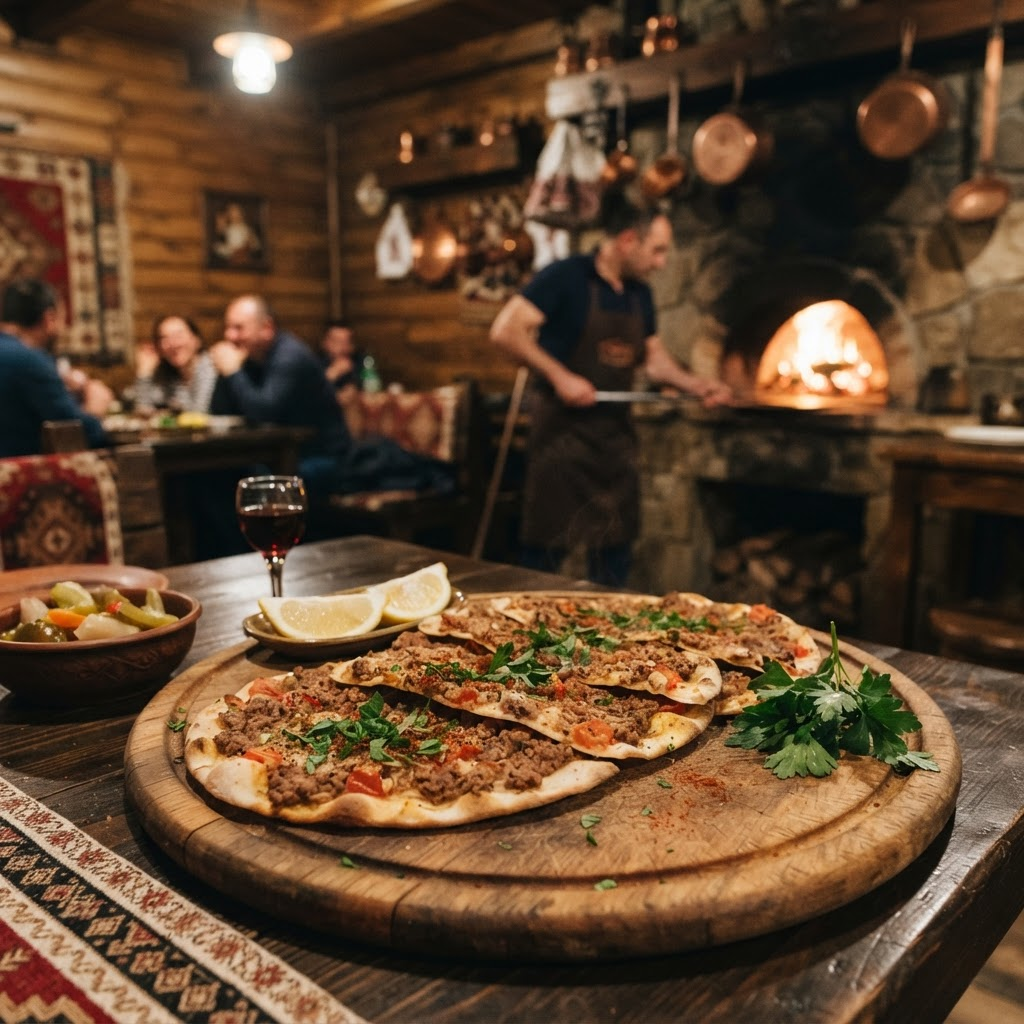
Lahmacun
Thin flatbread topped with spiced ground meat, onions, and herbs, baked until the edges are crispy. Eaten rolled with fresh herbs and lemon. It's casual, delicious, and often served as street food.
Kufta (Meatball)
A large, slow-cooked meatball (sometimes baseball-sized) stuffed with spiced meat and onions, simmered in a rich broth. It's comfort food at its finest— hearty, flavorful, and meant to be shared.
Lula Kebab (Vegetable Version)
Eggplant, potatoes, tomatoes, and other vegetables grilled on skewers with herbs. A serious vegetable dish, not an afterthought. Charred, smoky, and deeply satisfying.
Armenian Dining Culture in Burbank
Armenian restaurants in Burbank are not high-concept establishments. They are family-owned, long-standing institutions. Many have been operating in the same location for 20+ years, serving multiple generations of both Armenian families and curious neighbors. The pace is unhurried. Groups gather. Meals last hours.
Food in Armenian culture is communal. A proper Armenian meal includes meze (starters like hummus, baba ganoush, stuffed grape leaves), main courses, bread, and always lavash—the thin flatbread that accompanies everything. Meals are accompanied by tea, coffee, or arak (a strong anise-flavored spirit).
How to Order Like a Local
- •Start with meze: Order several small plates to share. This is how Armenian dining begins.
- •Ask for the grilled meat: The kebab (whether shish or lula) is almost always worth ordering. This is where restaurants show their skill.
- •Get extra lavash: Lavash is essential for wrapping and soaking up sauces. Never turn down free bread.
- •Finish with tea: Armenian meals end with strong black tea (or coffee) and often dessert. Pace yourself.